







Sept. 20, 2006
SERIES NOTES
Notre Dame and Penn State have met 17 times all-time with the series even at 8-8-1. The last meeting came on November 14, 1992 with the Irish taking a 17-16 win in the game that has become known as the “Snow Bowl.” At Notre Dame Stadium, the Irish are 4-3-0 against the Nittany Lions.
Notre Dame is 213-106-15 all-time versus the Big Ten Conference. Today’s game against Penn State is the first time the two schools have met since the Nittany Lions began playing football in the Big Ten (1993).
The last five times that Notre Dame and Penn State have met, both programs have been ranked. In the last meeting in 1992, the Irish were eighth in the nation and the Nittany Lions were 22nd. This afternoon, Notre Dame is ranked second by the AP and tied for third by USA Today while Penn State is 19th in both polls. Four times in the series, one of the two teams has been ranked No. 1 (Notre Dame, three times (1988, ’89, `90 and Penn State, once – `85).
The last time that Penn State won at Notre Dame Stadium was on November 17, 1990, when the Nittany Lions handed the top-ranked Irish a 24-21 loss on Craig Fayak’s 34-yard field goal with :04 left on the clock.
Today’s game brings two of the most storied programs in college football together. Notre Dame comes into the game with 812 all-time wins to rank second on the all-time list. Penn State ranks seventh with 772 all-time wins. The Irish rank second all-time in winning percentage with a .7437 mark and the Nittany Lions are fourth with a .7133 winning percentage.
Penn State head coach Joe Paterno picked up his 355th career win last weekend against Akron. He ranks fourth on the all-time wins list (third among active coaches). He is 8-5 all-time against the Irish.
PRESENTING THE FLAG …
Our national colors will be presented prior to the game by Julie Doyle, a former volleyball player from the class of 1985 and the first woman to serve as president of Notre Dame’s National Monogram Club, and, in celebration of the 35th year of women’s athletics at Notre Dame, the first five women to earn monograms in a varsity sport: tennis players Jane Lammers, ’77, from Fallbrook, Calif., and Mary Shukis Behler, ’79, from Rosemont, Pa.; and fencers Catherine Buzard Sazdanoff, ’78, from Lake Forest, Ill., Kathleen Valdiserri, ’78, from Chicago, and Dr. Christina Marciniak, ’77, from Oak Park, Ill.
FACULTY HIGHLIGHTS
Featuring Notre Dame’s Outstanding Faculty
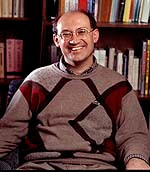
Professor Vittorio Hösle joined the faculty of the University of Notre Dame in 1999 as the Paul G. Kimball Chair in Arts and Letters. Described by his peers as possessing the kind of intellect one encounters perhaps once or twice in one’s lifetime, Professor Hösle is widely considered to be Europe’s preeminent young philosopher and a scholar of truly international stature. Having mastered Latin, Greek, and Sanskrit in his youth, Professor Hösle is fluent in English, Italian, German, Norwegian, Russian, French, and Spanish–and conversant in a significant number of other ancient and modern languages. He has held guest faculty appointments at universities around the globe, including in Brazil, India, Russia, Norway, Italy, and the Netherlands. He is also regarded as a leading Catholic intellectual and has participated in conferences at the Lateran University, the best-known papal university in Rome. Known both for the breadth of his knowledge and for the depth of his insight, Professor Hösle has written over 20 books and more than 100 essays on topics ranging from the history of philosophy to environmental ethics. His most widely published work is The Dead Philosopher’s Café, an exchange of letters with a young girl that offers an imaginative introduction to the world of philosophy. It has been translated into twelve languages. In addition to being a philosopher, Professor Hösle is an extremely influential public intellectual, particularly in Germany. He has counseled the office of the German chancellor and has been the subject of two German documentaries. Professor Hösle’s influence extends also to the educational system in Europe; he pioneered a multi-media encyclopedia of philosophy sponsored by the European Parliament that is now used in school curricula across the continent. Professor Hösle is teaching a course entitled “Goethe to Nietzsche to Kafka” to undergraduate and graduate students this fall.
FIGHTING IRISH FIGHT FOR LIFE
In its second year, the Fighting Irish Fight for Life Program has been a WIN/WIN situation for Notre Dame student-athletes and several patients participating in the Memorial Hospital’s Pediatric Oncology Program. Former Irish basketball standout Harold Swanagan, currently Notre Dame’s coordinator of student welfare and development, has seen the impact of this program on both the participants, student-athletes, and staff. “Being a student-athlete at Notre Dame isn’t an easy task,” says Swanagan, “But working with the kids participating in this program helps them realize what life is really about.” Through the Fighting Irish Fight for Life program, Notre Dame student-athletes have gained their biggest fans, and at the same time they have been able to tutor, attend the participants sporting events, act as big brothers and sisters, and be a supporting friend while the participants undergo cancer treatment. “I don’t have a lot of family in the area, and seeing the Fighting Irish Fight for Life participants at my game meant a lot,” says Swanagan. “They have become a part of our Notre Dame family.” “It also means a lot to the patients at Memorial Children’s Hospital Pediatric Oncology Program” remarks Tammy Robison, Parent Advocate and mother of a childhood cancer survivor. “The children need a positive role model through this very difficult time in their young lives. To be affiliated with Notre Dame and the student athletes, is a dream come true for many of our patients.” Taking a group of our patients to the Elkhart Express game (of which Swanagan is a member) and cheering on Harold and his team was awesome! Harold truly loves and cares about our patients and it was fabulous for the kids to return the gesture. Thank you, Harold for making a difference in the lives of these very special children and their families.”